
Thursday, February 5, 2026
Western Marsh Harrier/වගුරු බිම් උකුස්සා/වගුරු හැරිකුස්සා (Circus aeruginosus)


Sunday, February 1, 2026
Blue Rock-Thrush (philippensis)/නිල් වල් අවිච්චියා/නිල් ගල්සැරියා (Monticola solitarius philippensis)

The Blue Rock Thrush (Monticola solitarius pandoo) is a rather rare but regular migrant, occurring locally on large rock outcrops, boulders, and scattered small rocks in open areas of mountain slopes in the dry lowlands and hills. During its stay in Sri Lanka, it is mostly encountered as a solitary bird and feeds on small insects on the ground. It breeds in the hills of Afghanistan, Baluchistan, and the Himalayas.
The bird featured in this post belongs to the subspecies philippensis, recorded for the first time in Sri Lanka at the Inginiyagala Reservoir Dam site during the 2025–2026 migratory season. This subspecies breeds in eastern Mongolia, northeastern China, Korea, Japan, coastal Taiwan, and the northern Philippines.
Saturday, January 24, 2026
නර කරඹ/මුඩ මහණ (Blumea obliqua)

Sunday, January 18, 2026
Northern Shoveler (Spatula clypeata)

An uncommon winter migrant to coastal lagoons, other coastal wetlands and freshwater habitats of the dry lowlands, occurring mainly in the north and rarely in the wet lowlands. The Northern Shoveler is usually found in small to large flocks and feeds on small larvae and other invertebrates by sieving surface water with its bill. It breeds in the temperate regions of the Northern Hemisphere.
Saturday, January 17, 2026
Orange-headed Thrush/තැඹිලි වල් අවිච්චියා (Geokichla citrina)

Sunday, January 11, 2026
Black-naped Oriole (Oriolus chinensis)

Rare winter migrant to forests, plantations, and wooded gardens from lowlands to the hills. While wintering in Sri Lanka, the Black-naped Oriole occurs mainly as solitary birds and feeds on berries and insects in the canopy. It breeds in SE Russia, northeastern China, Korea, Japan, Vietnam, and the Andaman and Nicobar Islands, and wintering mainly in northeastern part of the India and peninsular regions as well as Bangladesh.
Tuesday, December 30, 2025
Crimson-backed Flameback (Chrysocolaptes stricklandi)

Monday, December 29, 2025
දික්පෙඳ සබරිත්තා/ගුරු ඇස්පටියා (Lanius schach)

English Post >>
Sunday, December 28, 2025
Mongolian Short-toed Lark (Calandrella dukhunensis)

Saturday, December 27, 2025

Friday, December 26, 2025
Green Warbler (Phylloscopus nitidus)

Thursday, December 25, 2025
ගෙල සුදු වී කුරුල්ලා (Lonchura malabarica)

ප්රධාන වශයෙන් පහත රට වියලි කලාපයේ මන්නාරම, යාපනය සහ හම්බන්තොට දිස්ත්රික්ක වල ශුෂ්ක වෙරල තීරයේ තෘණ භූමි, කුඹුරු සහ වෙනත් වගා බිම් වල එතරම් සුලභ නොවන ලෙස හමුවන දේශීය පක්ෂියෙකි. වියලි කලාපයේ සමහර ප්රදේශ වල ස්ථානීය වශයෙන් හුදකලා සමූහයන්ද ඇතැම් විට දැක ගත හැක. තෘණ බීජ, වී ආදි දේ ආහාරයට ගන්නා මෙම වී කුරුල්ලා බොහෝවිට 10-12 පමණ රංචු ලෙසින් හමුවන මුත් ඇතැම් අවස්ථා වලදී විශාල රංචු ලෙසින්ද දැකගත හැක. ගෙල සුදු වී කුරුල්ලා වසරේ දෙසැම්බර් සිට මාර්තු දක්වා කාලයේ වෙනත් වී කුරුල්ලන් මෙන් තෘණ භාවිතයෙන් ගෝලාකාර කූඩුවක් තනා එහි බිත්තර 4 සිට 6 දක්වා ප්රමාණයක් දමා අභිජනනය සිදු කරයි.
English Post >>Saturday, December 20, 2025
Amur Falcon (Falco amurensis)

Saturday, December 6, 2025
Indian Cuckoo/කෝන කොහා/ඉන්දු කෝකිලයා [Kona Koha/Indu Kokilaya] (Cuculus micropterus)

Sunday, November 16, 2025
මාතුඩු ගස්රැවියා/මහතුඩු හම්බු කුරුල්ලා (Phylloscopus magnirostris)

පහත රට ප්රදේශ වල සිට ඉහල කඳුකරය දක්වා තෙත් සහ වියලි කලාපීය වනාන්තර සහ හොඳින් ගහ කොළ සහිත ගෙවතු වල සුලභව හමුවන සංචාරක පක්ෂියෙකි. තනි තනි පක්ෂීන් වශයෙන් හෝ එකම ප්රදේශයක විසිරුණු සමූහයක් ලෙසට වනාන්තර උඩු වියනේ ආහාර සොයමින් හැසිරෙන මෙම පක්ෂියා හිමාලය ප්රදේශයේ අභිජනනය කරයි.
English Post >>
Monday, November 10, 2025
Dollarbird /හොට පළල් දුම්බොන්නා/දුම්කාවා (Eurystomus orientalis)

Saturday, November 8, 2025
Legge's Hawk-Eagle/මහ කොණ්ඩරාජාලියා/හෙල් කොණ්ඩකුස්සා [Maha Kondarajaaliya/Hel Kondakussa] (Nisaetus kelaarti)

Thursday, November 6, 2025
කොණ්ඩ කවුඩා/ශ්රී ලංකා සිළු කවුඩා (Dicrurus lophorinus)

English Post >>
Monday, November 3, 2025
බඩරතු රාජාලියා/කුසරත් සිළුකුස්සා (Lophotriorchis kienerii)

දිවයින පුරාම පාහේ වනාන්තර සහ හොඳින් ගහ කොළ සහිත ප්රදේශ වල දුර්ලභ ලෙසින් හමුවන දේශීය පක්ෂියෙකි. ජෝඩු ලෙසින් හෝ තනි තනි පක්ෂීන් ලෙසින් දිවි ගෙවන මෙම රාජාලියා ප්රධාන වශයෙන් වෙනත් පක්ෂීන්, විශේෂයෙන් පරවියන් ගොදුරු කර ගනී. අහසේ ඉහල සිට වේගයෙන් එවන් පක්ෂීන් හඹා ගොස් අල්ලා ගන්නා අතර එයට අමතරව කුඩා ක්ෂිරපායින් සහ උරගයන්ද ආහාරයට ගනී. වසරේ දෙසැම්බර් සිට මාර්තු දක්වා කාලයේ ගසක් මත කෝටු කැබැලි ගොඩ ගසා වටේට ශාක පත්ර යොදා තනන කූඩුවක එක් බිත්තරයක් දමා අභිජනනය කරයි.
English Post >>
Sunday, November 2, 2025
Plum-headed Parakeet/පණු ගිරවා [Panu Girawa] (Psittacula cyanocephala)

Wednesday, October 22, 2025
ලය තැඹිලි මැසිමාරා/ලය රන් නිල් මැසිමාරා (Niltava tickelliae jerdoni)

දිවයිනේ සෑම දේශගුණික කලාපයකම පාහේ වනාන්තර මෙන්ම ගෙවතු සහ වගා බිම් වල හොඳින් වදුල සහිත ස්ථාන වල සුලභ දේශීය පක්ෂියෙකි. බොහෝවිට දිය පාරවල් දෙපස හමුවන මෙම පක්ෂියා හවස් කාලයේදී ඉතාමත් ක්රියාශීලි වේ. යටිරෝපනයේ එහෙ මෙහෙ ඉගිලෙමින් ප්රධාන වශයෙන් කුඩා ඉගිලෙන කෘමීන් ආහාරයට ගන්නා ලය තැඹිලි මැසිමාරා වසරේ පෙබරවාරි සිට ජූනි දක්වා මාස වල පාසි, ශාක පත්ර වල නටු, දිරාගිය කොළ කැබලි, කුඩා කෙඳි වැනි දේ භාවිතා කරමින් කණ්ඩියක වූ කුහරයක හෝ නොඋස් කොටයක සාදනු ලබන කෝප්පයක හැඩැති කූඩුවක බිත්තර දෙකක් හෝ තුනක් දමා අභිජනනය කරයි.
English Post >>
Sunday, October 19, 2025
Sri Lanka Drongo/කොණ්ඩ කවුඩා/ශ්රී ලංකා සිළු කවුඩා [Konda Kawuda/Sri Lanka Silu Kawuda] (Dicrurus lophorinus)

සිංහලෙන් කියවන්න >>
Wednesday, October 15, 2025
මූකලන් කොට්ටෝරුවා (Megalaima rubricapillus)

පහත රට තෙත් කලාපීය ප්රදේශ වල සිට කඳුකරයේ මධ්යම උස් මට්ටම් දක්වා වනාන්තර සහ ගස් කොළන් සහිත ගෙවතු වල ස්ථානීය වශයෙන් සුලභ ආවේනික පක්ෂියෙකි. නැගෙනහිර කඳුකර ප්රදේශ වල සහ ඉහල කඳුකර එවන් පරිසර පද්ධති වලද එතරම් සුලභ නොවන ලෙසින් හමුවේ. ප්රධාන වශයෙන් පළතුරු ආහාරට ගන්නා මූලකන් කොට්ටොරුවා පෙබරවාරි සිට මැයි දක්වා මාස වල සහ නැවතත් අගෝස්තු සිට සැප්තැම්බර් දක්වා කාලයේ අභිජනනය කරයි. එහෙත් වසරේ වෙනත් මාස වලද කලාතුරකින් අභිජනනය කරන බව නිරීක්ෂණය කර ඇත. මියැදුනු ගසක මෘදු කඳේ හෝ අත්තක හාරන ලද බෙනයක බිත්තර දෙකක් හෝ තුනක් දමා අභිජනනය කරයි.
English Post >>
Sunday, October 12, 2025
Red faced Malkoha/වත රතු මල්කොහා [Wata Ratu Malkoha] (Phaenicophaeus pyrrhocephalus)

Saturday, September 20, 2025
Kuruna debilis [Syn: Arundinaria debilis]

Saturday, August 30, 2025
Jungle Owlet/වයිරම් බස්සා/වන උපබස්සා[Wayiram Bassa/Wana Upabassa] (Glaucidium radiatum)

Friday, August 29, 2025
උකුසු බස්සා/දුඹුරු උකුසු බස්සා(Ninox scutulata)
 දිවයින පුරා වනාන්තර, වගා බිම් සහ ගහ කොළ සහිත නගර සහ ගම්මාන ආශ්රිතවද හමුවන දේශීය පක්ෂියෙකි. එහෙත් ඉහල කඳුකරයේ එතරම් සුලභ නොවේ. තරමක් දුරට තුරු වදුලින් යුත් කොළඹ සහ ඒ අවට ප්රදේශද ඇතුලත් නාගරික සහ අර්ධ නාගරික ප්රදේශ වල විදුලි හෝ දුරකතන කණු මත හෝ වහලවල් මත තිබෙන රූපවාහිනි ඇන්ටෙනා මත රාත්රී කාලයේදී වසා සිටින මෙම බස්සාගේ දර්ශනය එතරම් දුලභ දසුනක් නොවේ. බොහෝවිට සඳ එළිය සහිත රාත්රී වලදීත් වෙනත් දිනවලත් ඇසෙන කූක්..කූක් නාදය මගින් මෙම පක්ෂියා එම ප්රදේශයේ සිටින බව පහසුවෙන් හඳුනාගත හැක. රාත්රී කාලයේදී ක්රීයාකාරි උකුසු බස්සා යම් ස්ථානයක සිට වරින් වර ඉගිලී ගොස් ගොදුරු කරගන්නා කෘමීන් ආහාරයට ගනී. උකුසු බස්සා මාර්තු සිට අප්රියෙල් දක්වා කාලයේ සහ නැවතත් නොවැම්බර් මාසයේ ගස් බෙනයක බිත්තර 2 ක් හෝ 3 ක් දමා අභිජනනය කරයි.
English Post >>
Thursday, July 17, 2025
Sunday, July 13, 2025
Drongo-cuckoo/Fork-tailed Drongo-cuckoo/කවුඩු කොහා[Kawudu Koha] (Surniculus dicruroides)

Saturday, July 12, 2025
ලබු ගිරවා (Psittacula eupatria)

ලබු ගිරවා පහත රට ප්රදේශ වල සිට කඳුකරයේ මධ්යම උස් මට්ටම් දක්වා එතරම් සුලභ නොවන ලෙස හමුවන දේශීය පක්ෂියෙකි. එහෙත් ඇතැම් ප්රදේශ වල ස්ථානීය වශයෙන් සුලභව දැකිය හැක. ප්රධාන වශයෙන් වියලි කලාපයේ හමුවන මුත් තෙත් කලාපයේද කලාතුරකින් දැකිය හැක. ජෝඩු වශයෙන් හෝ කුඩා හෝ විශාල රංචු වශයෙන් වනාන්තර සහ ගහ කොළන් සහිත පරිසර පද්ධති වල සැරිසරමින් පළතුරු, බීජ වර්ග සහ ධාන්ය ආහාරයට ගන්නා ලබු ගිරවා නොවැම්බර් සිට මැයි දක්වා කාලයේ විශාල මැරුණ හෝ එසේ නොවන ගසක ස්වාභාවිකව ඇතිවූ හෝ කෑරළුන් විසින් තැනූ කුහරයක් තම අවශ්යතාවය පරිදි විශාල කරගෙන තැනූ බෙනයක බිත්තර 2 ත් 4 ත් අතර ප්රමාණයක් දමා අභිජනනය කරයි
English Post >>Saturday, June 28, 2025
පන් වඩුකුරුල්ලා (Ploceus manyar flaviceps)

English Post >>
Tuesday, June 24, 2025
Sunday, April 27, 2025
මහ වැලි ඔලෙය්යා/රජ වැලි ඔලෙවියා (Charadrius leschenaultii)

English Post >>
Sunday, April 20, 2025
වැලි සිලිවටුවා/වැලි හින්නා (Calidris alba)

English Post >>
Wednesday, April 16, 2025
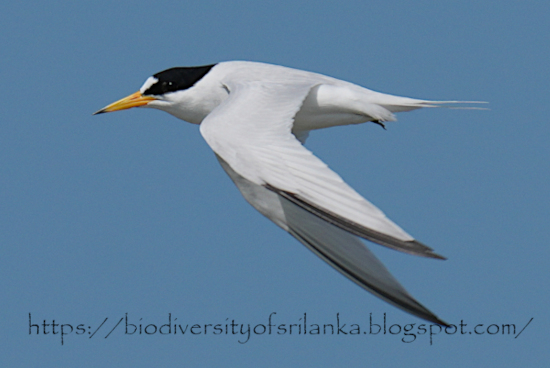
Saunders's Tern (Sternula saundersi)
Tuesday, April 15, 2025
Chinese Pond-Heron (Ardeola bacchus)

Very rare vagrant bird with few sight records in Sri Lanka. It breeds in Assam and Burma to Eastern China and Manchuria and in the Andaman islands. Non-breeding and immature Chinese Pond-Herons are indistinguishable from the common resident Indian Pond-Herons. However, during the breeding season, the Chinese Pond-Heron's distinctive maroon-chestnut head and neck make identification easier. As a result, all recorded sightings of this species in Sri Lanka have occurred at the end of the migratory season.
Chinese Pond Heron was first time recorded in Sri Lanka by Dieter Zingel (Germany) on 30th April 1995 at Deberawewa (Hoffmann, T. W., 1996). Later on sight record(s) available by Rex. I. de Silva from Negambo Lagoon (Kotagama S. & Ratnavira G. 2017: 258)
Recent observations reported in the eBird with photographic evidences
2) A single bird with breeding plumage by Edmundas Greimas Sigiriya Water Garden, Dambulla, Matale on 8th April 2024
3) A single bird with breeding plumage by Tharaka Dhananjaya, Ashan Tharaka Piyasinghe and Osanda Dissanayake at Anavilundawa Bird sanctuary on 4th April 2025.
References:
- Hoffmann, T. W., 1996. Ceylon Bird Club Notes 1995. Loris, 21(1), 16-18.
- Kotagama, S., Ratnavira, G. 2010. An illustrated Guide to the Birds of Sri Lanka. Field Ornithology Group of Sri Lanka, Colombo
Monday, April 14, 2025
Great Knot (Calidris tenuirostris)

Sunday, April 13, 2025
Red Knot (Calidris canutus)

Rare winter migrant to mud and sand flats as well as the borders of lagoons and estuaries of the dry zone coastal areas. Even though very gregarious birds, both in feeding and flight, in Sri Lanka it is most likely to be found as solitary individuals or as flocks of 2-3 birds. Red Knot breeds in far northern lands.
Thursday, April 10, 2025
Terek Sandpiper (Xenus cinereus)

Saturday, March 29, 2025
දාර මහවටුවා/වයිර පෙඳ ගොහොදුවිත්තා (Limosa lapponica)

English Post >>
Subscribe to:
Comments (Atom)